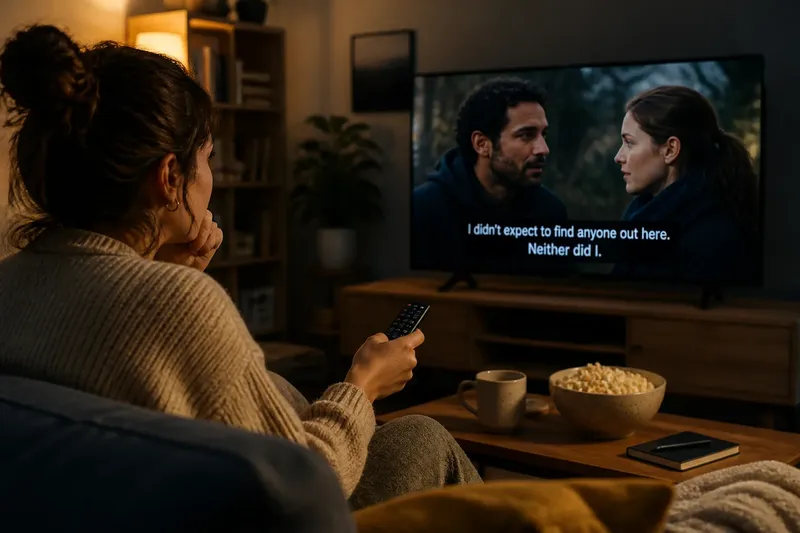
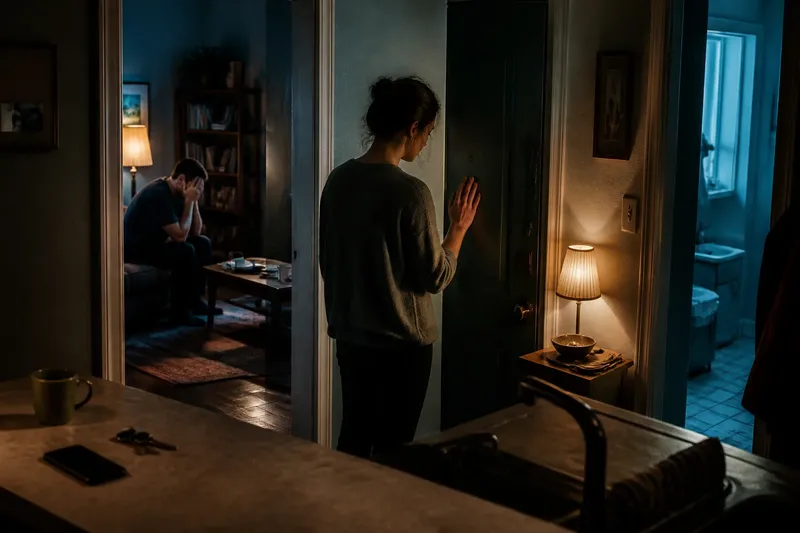
The Edge of the Frame Does More Than Crop
The edge of the frame directs attention by showing some details and hiding others. Use a week of close looking to notice what an image leaves out.
The most common mistake in reading an image is treating its frame as a neutral window. The edge of the frame directs attention, and overlooking that choice can make a partial view feel like the whole story. A week of close looking can help you separate what an image shows from what you infer.
This is not a hunt for hidden clues or proof of a creator’s motives. It is a routine for distinguishing visible evidence from interpretation. Use a notebook, a notes app, or a few lines beneath a saved image. Each day, choose one still image and give it a brief, unhurried look.
A week of looking
Keep the routine simple. Choose images you encounter naturally: a photograph in a local news story, a film still, a product image, or a picture in a family album. Avoid images that require you to share private material. If you save an image, note its source so you can return to the same version.
- Day one: Map the visible. List the people, objects, setting, and text you can actually see. Keep the notes literal: “one open suitcase” is more precise than “someone is leaving.”
- Day two: Trace the edges. Look at each side of the image. Notice a cut-off hand, a doorway, a horizon, or a shoulder partly beyond the border. Ask what each edge makes you wonder about.
- Day three: Follow attention. Identify the first detail you noticed, then the next. Consider contrast, size, position, focus, and lines in the scene. These are observable features, not proof that every viewer will look in the same order.
- Day four: Name the missing context. Write down one thing you cannot tell from the image alone: what happened just before, what lies beyond the visible space, or who else may be present.
- Day five: Separate observation from inference. Make two short lists. Put visible details in one and possible explanations in the other. Keep a question mark beside explanations the image cannot settle.
- Day six: Compare a different version. If another crop or a wider shot is available, place it beside the first. Note what newly appears and whether your reading changes. If no alternate view exists, do not imagine one as fact.
- Day seven: Revisit one image. Read your first notes, then look again. Add one observation you missed and one question that remains open.
You do not need to complete the routine on consecutive days. A single image can be enough for a session; the point is to make close looking a repeatable habit rather than a race to interpret.
What the border does
A frame establishes a field of view. In a photograph, that field might be set by the photographer’s position and crop. In a video, it may also change as the camera moves or the shot cuts. Either way, the visible image gives you evidence, but it cannot display everything around the scene at once.
The boundary can make a detail prominent without making it more important in the larger situation. A tight crop around a face may offer expression and texture while withholding the person’s surroundings. A wide view can show relationships between people and objects, yet make small details harder to read. Neither view is automatically more truthful. Each offers different information.
Look for the pressure the border puts on your attention. A line of sight may lead toward something just outside the frame. A cropped object can imply continuation, while empty space can make a visible subject feel isolated. These effects are useful observations. They do not, by themselves, tell you why the image was made that way.
What you can infer
Close looking works best when you keep three layers distinct:
- Visible evidence: what the image directly shows, such as a hand resting on a table.
- Composition: how visible elements are arranged, such as the hand sitting near the edge while a cup occupies the center.
- Interpretation: the story you build from those details, such as the person seeming anxious or about to leave.
Interpretation is not a mistake; it is part of viewing. The useful move is to mark it as interpretation rather than smuggling it into a description. If a caption or surrounding article supplies context, keep that information separate too. Ask whether the source identifies people and places, or simply encourages a particular reading.
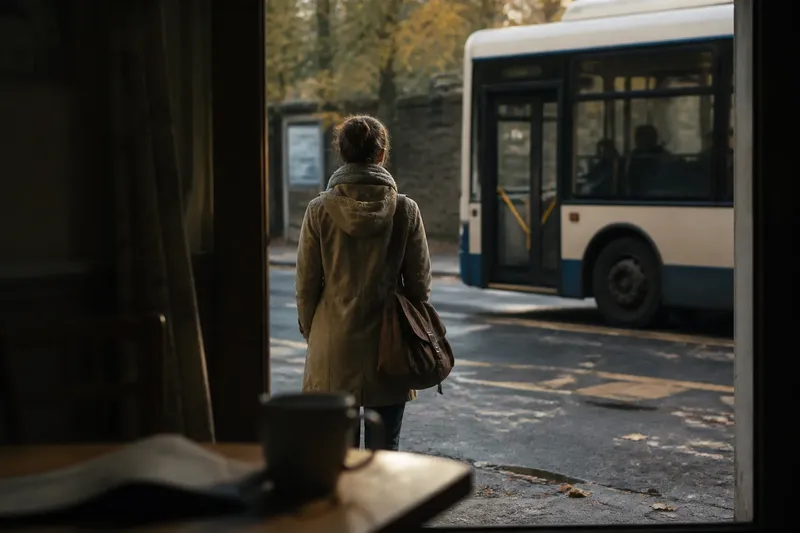
Say you are looking at an invented photograph of a person standing beside a bus, with one bag visible and the road cut off by the lower edge. First, write down the visible details: person, bag, bus, and crop. Next, list possible readings—boarding, waiting, or posing—and mark each as uncertain. Then check an accompanying caption or wider view, if available. If it identifies the person as waiting for a bus, that adds context; if it offers no such information, the image alone still cannot settle the question.
Context and framing?
Does a tight crop always mislead?
No. A close crop can make a relevant expression or object easier to examine. Ask what it helps you see and what it prevents you from checking.
Can a wide shot tell the whole story?
A wider frame can reveal more of a setting, but it still has boundaries and a chosen viewpoint. Treat added context as useful evidence, not a complete account of everything that happened.
What if the frame hides what lies beyond?
Write down the uncertainty instead of filling it with a confident story. Look for a caption, another image, or a source that explains the scene, while keeping clear about what each source contributes.
How do I discuss a frame fairly?
Describe visible details before offering an interpretation, and signal uncertainty when the image cannot confirm your reading. This makes disagreement easier to discuss because another viewer can point to a specific detail or missing context.
Keep questions open
Close looking is not an exercise in distrusting every image. It is a way to notice how a visual field is built and to avoid confusing a compelling view with a complete one. Some images provide enough context for a practical reading; others leave questions that only another source can answer.
Keep your notes modest and concrete. When the edge of the frame draws your eye, ask what it includes, what it excludes, and which conclusions depend on the missing space. That small pause is the lasting benefit of noticing how the frame directs attention.